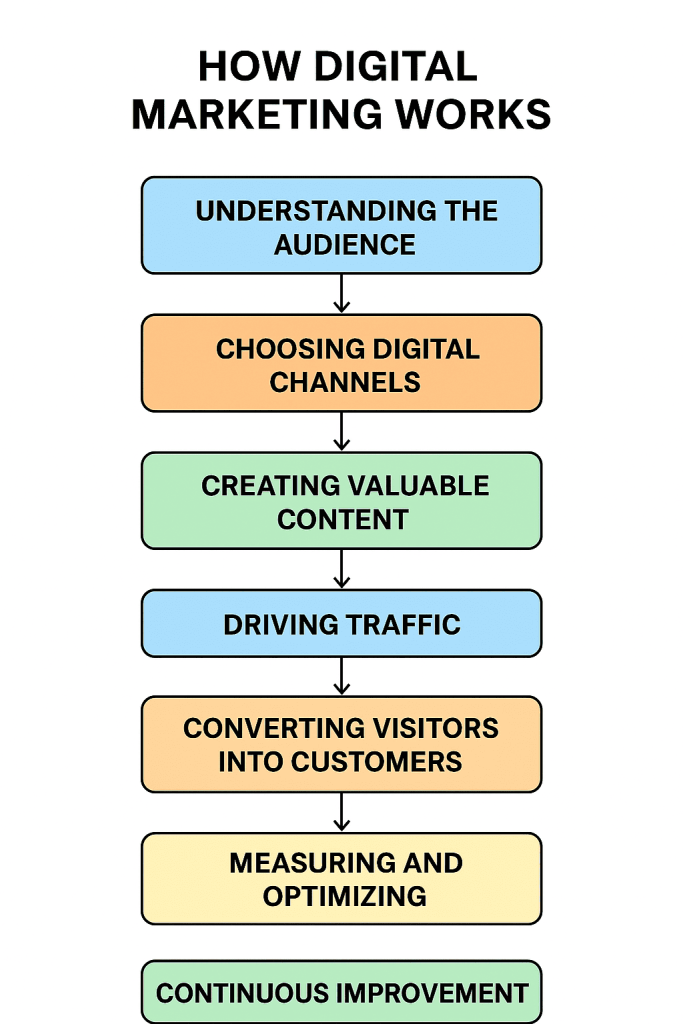
How does marketing strategy work in digital marketing ?
Marketing strategy works by using online channels and strategies to promote products, services, or brands, reaching the right audience at the right time. It’s essentially marketing in the digital space, and it combines creativity, data analysis, and technology. Here’s a clear breakdown of how it works:
1. Understanding the Audience Part of Marketing Strategy
Before any campaign starts, digital marketers research the target audience:
Demographics: Age, gender, location, language.
Interests & behavior: What websites they visit, what content they consume.
Pain points & needs: What problems they want to solve.
This ensures marketing messages are relevant and effective.
2. Choosing Digital Channels For Marketing Strategy
Digital marketing works across multiple platforms. Common channels include:
Search engines (Google, Bing) → SEO & paid search ads.
Social media (Facebook, Instagram, TikTok, LinkedIn) → Organic posts & paid social ads.
Email → Newsletters, promotions.
Websites & blogs → Content marketing & landing pages.
Video platforms (YouTube, TikTok) → Video marketing.
Apps & SMS → Direct notifications.
3. Creating Valuable Content For Marketing Strategy
Content is the core of digital marketing. It attracts, informs, and engages the audience:
Blog posts, articles, or guides.
Social media posts and stories.
Videos, infographics, and memes.
Email newsletters.
The content should be useful, relevant, and optimized to encourage clicks, shares, and conversions.
4. Driving Traffic
Once content is ready, marketers drive traffic using:
SEO (Search Engine Optimization) → Optimizing websites to rank higher in search results.
Paid ads → Google Ads, Facebook Ads, Instagram Ads.
Social media engagement → Sharing, posting, and interacting with followers.
Email campaigns → Sending targeted emails to subscribers.
5. Converting Visitors into Customers
Traffic is only useful if it leads to conversions:
Landing pages with clear calls-to-action (CTAs) like “Buy Now” or “Sign Up.”
Retargeting ads to remind visitors who didn’t purchase.
Personalized email campaigns.
6. Measuring and Optimizing
Digital marketing is highly measurable. Marketers track:
Clicks, impressions, and traffic.
Engagement (likes, comments, shares).
Conversion rate (how many visitors become customers).
ROI (Return on Investment).
Using this data, campaigns are optimized—weak areas are improved, and strong areas are amplified.
7. Continuous Improvement
Digital marketing isn’t one-time; it’s ongoing. Trends, algorithms, and audience behaviors change, so marketers continually refine strategies.
💡 Example:
If you run a restaurant in Penang, digital marketing could include:
Posting weekly menus on Instagram.
Running Facebook Ads targeting people nearby.
Publishing blog posts about your signature dishes for SEO.
Sending emails to loyal customers with special offers.
This combination increases visibility, attracts new customers, and keeps current customers engaged.